



Carpal tunnel surgery
Carpal tunnel syndrome happens when the median nerve is squished (compressed) in the wrist. The wrist is a hollow structure, which is made up of your wrist bones and a tight ligament in the palm. There are 9 tendons and 1 nerve (the median nerve) that passes through the hollow wrist.

Why does carpal tunnel syndrome happen?
Carpal tunnel syndrome may happen for many reasons, but the majority of the time it is idiopathic, meaning there is no identifiable cause. Over time, the tenosynovium (membranes) around those 9 tendons in our wrist enlarges, taking up more space in the wrist, and compressing the softest structure—your median nerve.
Symptoms
Symptoms may include numbness in the thumb, index, long, and half of the ring finger (but not the small finger), pins and needles, burning pain in the fingertips, and electrical shocks radiating from the wrist out into the fingertips or up the forearm.
Treatment
Treatment varies from non-invasive to more invasive. If your carpal tunnel wakes you up at nighttime, a carpal tunnel splint can help to stabilize the wrist in a comfortable position and prevent wrist flexion or extension which may compress the nerve.
Another treatment option is cortisone injection into the carpal tunnel, which can help reduce inflammation and associated swelling, and help offload pressure on the nerve.
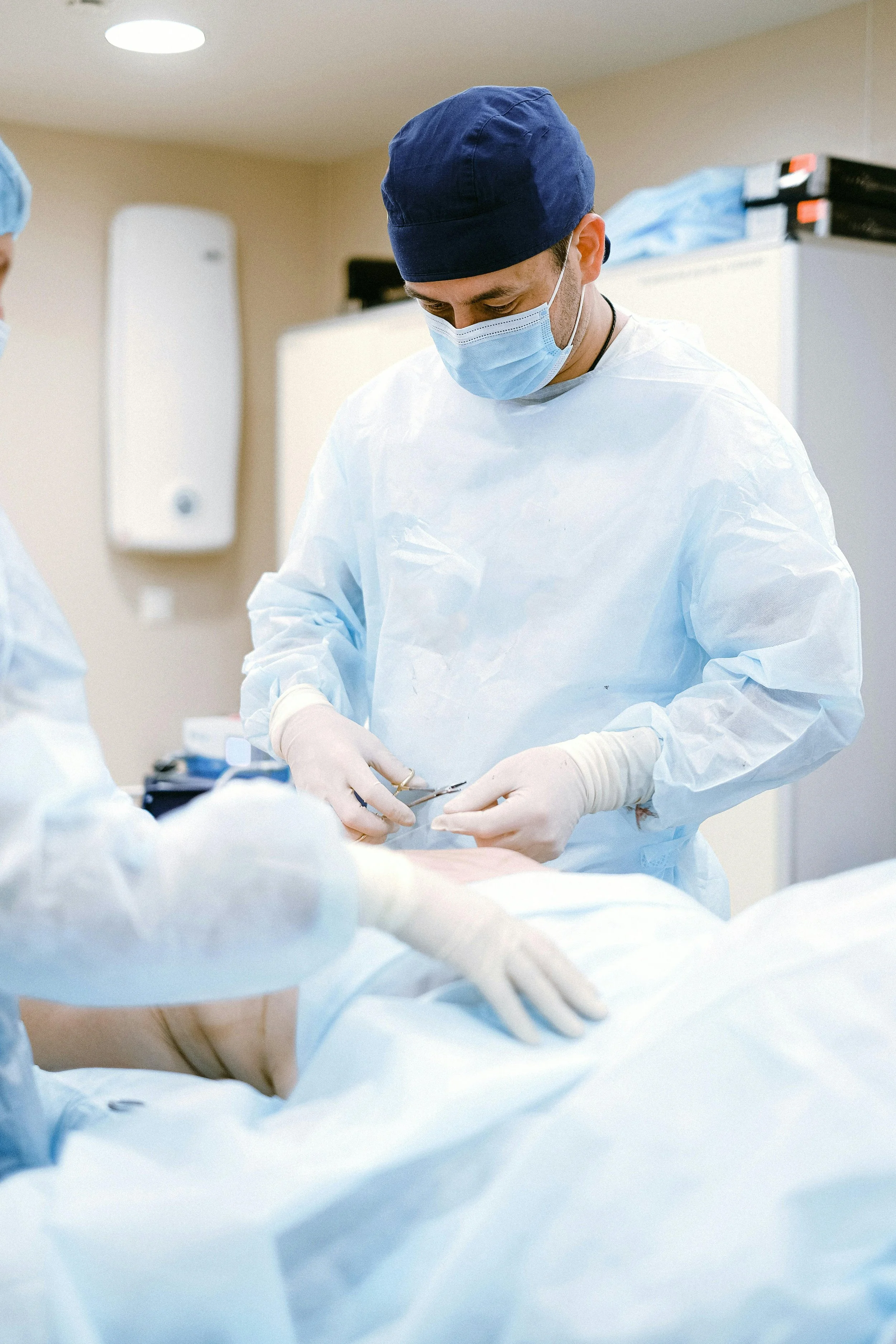
In situations where the symptoms are bothersome to the point of affecting your quality of life, or if symptoms are continuous, it is worthwhile to consider surgery (carpal tunnel release). Dr. Barkho performs an open carpal tunnel release (we do not perform endoscopic carpal tunnel release). This surgery is performed under local anesthesia, meaning you won’t have to recover from a complete general anesthesia. Local anesthetic is injected into the base of the palm, and the surgery involves releasing the overlying ligament in order to increase the space in the carpal tunnel, relieve the compression, and allow the nerve to receive normal blood flow.
Recover
This operation requires time to recover from surgery. For patients who have an office type job, we recommend taking two weeks off and then returning on modified (no heavy lifting > 5 kg) for another month after that. For patients who have a job involving heavy lifting, manual labour, or power tools, a similar restriction applies, and we recommend no operating of power tools or heavy lifting until 6 weeks after surgery.
Risks
Every surgery carries risks. The risks of carpal tunnel surgery include:
Infection, which may require antibioticsStitch abscess which usually resolves on its ownStiffness – all fingers in the hand may swell, making it difficult to make a fist, or move the wrist back and forth. If you have arthritis, you are at increased risk. Most patients recover full movement by the 2-week mark, but if you are still stiff at this point, you may need to see a hand therapist or physiotherapistScarring and scar sensitivity – the hand has a very dense concentration of sensory receptors, meaning the scar may be painful to light touch. The treatment for this is desensitization therapy. This is usually not permanent but may take 6-12 months to resolve. We make every effort to suture the wound in such a way as to minimize scarring, but there is always a risk the scar will heal unpredictably, becoming thickened or unsightlyPillar pain – this is a dull achy pain at the base of the wrist. It is pain which lasts longer than 6 weeks, usually worse with maximal wrist extension. It is due to internal scarring and resolves with scar massage and ultrasound therapy. It may take 6-12 months to resolve, and is more noticed in active patients Nerve injury – this is an incredibly rare complication, and occurs when the median nerve is injured during surgery. If this happens, it may lead to chronic pain, paralysis, permanent numbness, or loss of functionIncomplete recovery of symptoms – in situations where the carpal tunnel is advanced, the symptoms may not always recover after surgery. Numbness may be permanent, and in situations of constant numbness before surgery, may take 6-12 months or longer to recover. When there is muscle loss, this is typically permanent
Although there are risks to every surgery, the vast majority of patients experience significant relief and improvement in their quality of life after carpal tunnel surgery.
Preparation
Learn more in Information for Patients page.
Frequently Asked Questions
-
Lorem ipsum dolor sit amet, consectetur adipiscing elit. Sed posuere consectetur est at lobortis. Nulla vitae elit libero, a pharetra augue. Praesent commodo cursus magna, vel scelerisque nisl consectetur et. Integer posuere erat a ante venenatis dapibus posuere velit aliquet.
-
Lorem ipsum dolor sit amet, consectetur adipiscing elit. Cras mattis consectetur purus sit amet fermentum. Vestibulum id ligula porta felis euismod semper. Maecenas faucibus mollis interdum. Donec sed odio dui. Aenean eu leo quam.
-
Lorem ipsum dolor sit amet, consectetur adipiscing elit. Donec ullamcorper nulla non metus auctor fringilla. Etiam porta sem malesuada magna mollis euismod. Morbi leo risus, porta ac consectetur ac, vestibulum at eros. Nullam quis risus eget urna mollis ornare vel eu leo.